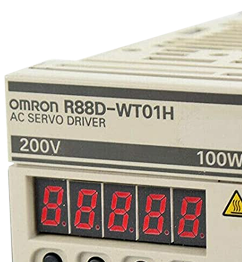
What is this unit used for in industrial systems?
This unit is a Yaskawa Varispeed E7 series AC inverter (variable frequency drive) used to control the speed and torque of an AC motor by varying the output frequency and voltage. It is commonly applied to equipment such as fans, pumps, conveyors and general motor-driven machinery.
What mains supply type is it intended for?
It belongs to the 400 V-class E7 range and is intended for three-phase industrial supplies (typically up to 480 VAC class, depending on the specific installation and local standards). Always confirm the exact permissible input range on the unit’s rating label before installation.
Do I need to install it in a cabinet to meet EMC limits?
A cabinet is not inherently required for EMC compliance. Good EMC practice focuses on correct filtering, earthing/bonding, cable screening, and routing. If those measures are implemented correctly, the installation can meet typical EMC limits without relying solely on an enclosure.
How can I reduce electrical noise and improve EMC performance?
Use an appropriate mains line filter, keep the filter physically close to the inverter, mount both on the same earthed metal plate, keep all filter-to-drive wiring as short as practicable, and use screened motor cable with the screen bonded to earth at both ends using large-area connections.
Where should the line filter be mounted relative to the drive?
The line filter and inverter should be mounted on the same metal mounting plate, with the filter installed as close to the inverter as practicable. This minimises cable length and helps reduce conducted and radiated noise.
What are the key earthing and bonding recommendations?
Bond the frames (earth points) of both the filter and the inverter to the same metal plate with as much surface contact as possible. Remove paint at bonding points to ensure a low-impedance connection, and prefer wide earthing straps/strips over long, thin earth wires for high-frequency performance.
Should the motor cable be screened, and how should the screen be connected?
Yes. Use a screened (shielded) motor cable and bond the screen to earth at both ends using short, large-area terminations (for example, with proper earthing clamps to an earthed metal plate). This is one of the most effective measures for reducing radiated emissions.
Is there guidance on maximum motor cable length for EMC?
For Varispeed F7/E7 400 V-class installations aimed at EN 55011 Class B levels, a maximum screened motor cable length of 50 m is typically referenced when using the recommended filtering and installation methods. If longer runs are required, additional EMC measures may be needed at the system level.
How should I route power and control wiring to minimise interference?
Route power cables (mains input and motor output) separately from control and signal wiring. Avoid long parallel runs, cross cables at right angles where they must intersect, and keep wiring tidy and short to reduce coupling of noise into control circuits.
What does EN 55011 “Class A” vs “Class B” mean in practice?
These classes relate to permissible electromagnetic emission levels. Class B is generally more stringent (often associated with commercial/light industrial environments), while Class A is typically for industrial environments. Achieving a given class depends on the complete installation: correct line filtering, bonding, screened cabling, and cable management.
Can I use a different brand of line filter than the recommended types?
It is possible to use an equivalent filter, but EMC performance depends on the filter’s electrical characteristics, its current/voltage ratings, and (critically) the physical installation and bonding. Where compliance is important, selecting a filter type referenced for the E7/F7 400 V-class range and installing it as specified is the most reliable approach.
What installation details most commonly cause EMC issues with drives like this?
The most common causes are: no mains line filter (or an incorrectly sized one), long unshielded motor leads, poor bonding due to painted/insulated mounting surfaces, long filter-to-drive wiring, and mixed routing where power and control cables are bundled together. Addressing these points usually yields the largest EMC improvement.