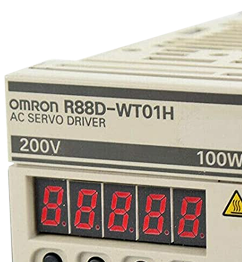
What type of controller is this and where is it typically used?
It is a compact base PLC controller from the Twido family, intended for small to mid-sized machine control where integrated discrete I/O and straightforward expansion are needed (e.g., packaging, conveyors, small process skids, pump/valve control panels).
What supply voltage does it require?
It uses a 24 V DC rated supply. The allowable supply range is 20.4 to 28.8 V DC.
How many inputs and outputs are built in?
It has 24 discrete I/O in total: 14 digital inputs (24 V DC) and 10 relay outputs.
Are the digital inputs sink or source?
The inputs support sink or source logic, allowing flexibility depending on whether the field devices are wired as sourcing (PNP) or sinking (NPN) arrangements.
What are the digital input electrical characteristics?
Input voltage limits are 20.4 to 28.8 V. Input current is 11 mA for channels I0.0 to I0.1 and 7 mA for channels I0.2 to I0.13. Input impedance is 2100 ohm (I0.0 to I0.1) and 3400 ohm (I0.2 to I0.13).
What kind of outputs are provided and what loads can they switch?
The unit provides 10 relay outputs. Typical per-point load current is up to 2 A at 240 V AC (resistive or inductive, 30 cycles/min) and up to 2 A at 30 V DC (resistive or inductive, 30 cycles/min). Minimum load is 0.1 mA.
Does it have built-in communications?
Yes. It includes a non-isolated serial link via mini-DIN supporting Modbus/character modes (RTU/ASCII) on RS485 half-duplex up to 38.4 kbit/s.
Can I add an RS232 or additional RS485 interface?
Yes. A serial interface adaptor can be used to provide RS232C or RS485 options (for example, adaptor accessories such as TWDNAC232D or TWDNAC485D are compatible).
How many expansion I/O modules can be added?
Up to 4 I/O expansion modules can be added to extend the system beyond the built-in I/O.
What is the maximum expanded I/O capacity?
With expansion modules, the maximum input/output count depends on the expansion connector/terminal style used: up to 120 with spring terminal block expansions, up to 152 with HE-10 connector expansions, or up to 88 with removable screw terminal block expansions.
Is there an option for memory or a real-time clock?
There is one slot available for either a memory cartridge or a real-time clock (RTC) cartridge; only one of these can be installed in the compact base at a time.
How is application data retained during power loss?
The internal RAM is backed up by an internal lithium accumulator; after a full charge (typically 10 hours), backup is approximately 30 days. The stated battery service life is 10 years.
Does it support high-speed counting?
Yes. It supports 1 counting input channel up to 20 kHz (32-bit) and 3 channels up to 5 kHz (16-bit).
Does it include analogue adjustment points?
Yes. It includes analogue adjustment capability: 1 point adjustable from 0 to 511 points and 1 point adjustable from 0 to 1023.
What indicators are available on the front of the unit?
It includes status LEDs for power (PWR), run (RUN), per-channel I/O status, a module error LED (ERR), and a user pilot light (STAT).
What are the physical dimensions and mounting considerations?
Approximate dimensions are 90 mm (W) x 95 mm (H) x 70 mm (D), with a net weight of about 0.305 kg. It is intended for horizontal mounting on a vertical plane (typical control panel/DIN rail orientation) with adequate ventilation clearances.
What are the environmental ratings for panel use?
It is rated IP20 and intended for installation within an enclosure. Operating temperature is 0 to 55°C, storage temperature is -25 to 70°C, and relative humidity is 30 to 95% (non-condensing).
What is the power consumption and inrush current?
Power consumption is up to 8.7 W. Inrush current is up to 40 A at power-up.
What type of I/O wiring terminals are used?
The base controller uses a non-removable screw terminal block for I/O connections.