

By Alex Bailey, Senior Key Account Manager, EU Automation

Alex Bailey is a Senior Key Account Manager at EU Automation, working closely with manufacturers across multiple industries to help them navigate automation part obsolescence, legacy system support and unplanned downtime risks. With hands-on experience sourcing discontinued components and advising customers through complex lifecycle challenges, Alex provides a frontline perspective on how obsolescence really impacts modern manufacturing.
Obsolescence is not the problem. Silence is.
In manufacturing, obsolescence is not a question of if but when. From the moment an automation component is released, its lifecycle begins ticking towards eventual discontinuation. Yet many of the challenges associated with obsolescence do not stem from parts being phased out, they stem from how, when and whether that information is communicated.
For engineers, procurement teams and plant managers, poor lifecycle transparency can be just as disruptive as a failed component. Missed notifications, unclear phase-out documentation and fragmented communication across multiple OEMs often lead to reactive decision making, inflated costs and avoidable downtime.
Siemens reported unplanned downtime now costs the world’s 500 biggest companies 11% of their revenues [1].
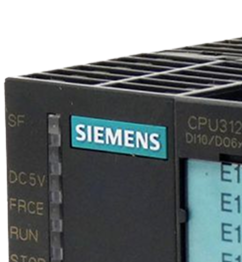
This is becoming increasingly relevant when major automation parts such as SIMATIC S7-300 and ET200M entered their discontinuation phase on 1st October 2025 [2]. These systems remain deeply embedded in production environments worldwide and for many end users, the reality of their phase-out only becomes clear when a purchase order is rejected or a critical failure occurs.
How OEMs communicate lifecycle change
From an end user perspective, OEM lifecycle communication is often inconsistent and difficult to interpret.
There are effectively two layers of manufacturers involved in automation systems.
- The first are original component manufacturers who produce the underlying technology.
- The second are original equipment or machine manufacturers who integrate those components into complete systems.
In practice, lifecycle information rarely flows cleanly between the two.
End users typically engage directly with equipment manufacturers or authorised distributors rather than component manufacturers. As a result, obsolescence is often discovered late, through an obsolete notification or a bounced purchase order.
Good lifecycle communication means advance, specific, part-level notices (e.g., EOL dates, last-time-buy windows, support timelines and recommended successors). Yet industry data shows that around 25–30% of end-of-life changes occur without any product change notification (PCN), meaning users might not even get basic alerts unless they ask for them [3].
If you haven’t been given this information, you should request it from your supplier or OEM.
Practical questions to raise with your OEM or machine builder include:
- Where does this part sit in its lifecycle?
- What are the last-time-buy and end-of-support dates?
- What successor or alternate parts are recommended?
When manufacturers provide clear lifecycle data and notifications, teams can plan spares, manage budgets and schedule upgrades rather than reacting to shortages. When they don’t, scarcity becomes the prompt for costly emergency sourcing and unplanned downtime.
The end user reality: reactive by necessity
For engineers and maintenance teams, the greatest challenge is not just sourcing obsolete parts, it is knowing where equipment sits within its lifecycle in the first place.
Large facilities often operate mixed install bases made up of multiple OEMs, technologies and generations. Tracking lifecycle status across PLCs, drives, HMIs, motors and I/O systems is difficult to manage alongside daily operational pressures.
When a part becomes obsolete, teams default to sourcing the same obsolete part to restore production quickly. This reactive approach may work for a while, but it tends to inflate emergency costs and tie up engineering capacity that could be spent on strategic work.
What end users can do now
- Maintain an install-base register with lifecycle status for all critical parts and update it quarterly.
- Request formal EOL, last-time-buy and end-of-support dates from OEMs for each part number
- Classify parts as active, at risk or obsolete and prioritise spares planning for those at risk
- Set an internal escalation rule if lifecycle data cannot be provided within an agreed SLA
This shifts teams from reactive scrambling toward predictable planning, reducing downtime risk and emergency sourcing costs.
The procurement challenge
Procurement teams experience obsolescence from a different angle.
Procurement teams are often engaged after a part has been flagged as urgent, leaving little time to assess lifecycle risk, verify availability or control cost.
This environment also creates opportunity for opportunistic resellers. Scarcity can drive inflated pricing and uncertainty around quality or condition. Without trusted suppliers, procurement teams risk paying more, waiting longer or sourcing parts with limited assurance.
What procurement teams can do
- Require lifecycle status and support timelines as part of every sourcing request for critical parts
- Flag parts with abnormal price increases or extended lead times as obsolescence risks, not one-off supply issues
- Use pre-approved, trusted suppliers for discontinued and legacy parts to reduce quality and authenticity risk
- Align with engineering on last-time-buy decisions before scarcity drives emergency purchasing
Proactive supplier qualification and early lifecycle checks enable procurement to stabilise pricing, shorten lead times and reduce exposure to opportunistic sourcing, turning obsolescence from a firefight into a managed supply risk.
Why independent distributors matter
Independent distributors play a critical role in bridging the gap between OEMs and end users.
Unlike manufacturers, distributors operate across brands, generations and lifecycle stages. This provides broader visibility into which parts are becoming scarce, which part familes are quietly being phased out and where customers are most exposed to risk.
At EU Automation, differentiation is not about being the cheapest. It is about knowledge, availability and reliability. Our global sourcing network and strong product visibility enable rapid response for legacy and obsolete automation parts.
Acting before obsolescence forces action
The most effective advice for engineers and procurement teams is to act early.
Parts that are accessible today may no longer be available weeks later, sold to organisations that were better prepared. A recent study showed that predictive tools have reduced downtime by up to 50% [4].
Obsolescence surveys, install base reviews, proactive spares strategies and predictive tools remain underused, yet they are often the difference between controlled planning and emergency response.
Closing the obsolescence gap
Obsolescence is unavoidable. Confusion, downtime and inflated risk are avoidable.
As product lifecycles shorten and communication remains inconsistent, manufacturers need partners who understand both the technical and commercial realities of legacy automation. By combining global sourcing, lifecycle awareness and experienced account management, EU Automation helps customers close the gap between discontinuation notices and operational reality, keeping production running when original roadmaps reach their end.
Sources
[3] https://www.z2data.com/insights/82-000-product-lifecycle-changes-in-2023-had-no-pcn
[4] https://idsindata.co.uk/manufacturing-downtime-costs-and-forecasting/