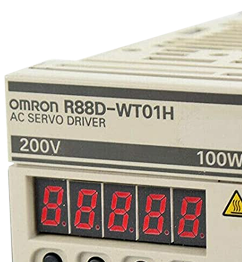
What are the voltage requirements for this synchronous servo motor?
The Siemens synchronous servo motor operates at a voltage range of 380 to 480 V ac or 510 to 720 V dc, ensuring compatibility with a variety of industrial power supplies.
What is the maximum speed this motor can achieve?
This motor is capable of reaching a maximum speed of 6000 rpm under optimal conditions, making it suitable for high-speed applications.
Can you describe the torque characteristics of this motor?
The motor provides a rated torque of 1.6 Nm, with an optimum power output at this torque level. It is designed to deliver consistent and reliable performance for precision-driven tasks.
Is there a holding brake feature available with this motor?
Yes, the motor comes equipped with a permanent-magnet holding brake, which provides a holding torque of 1.9 Nm, ensuring the motor maintains its position when power is not applied.
What type of cooling does the motor utilise?
This motor utilises natural cooling, which is sufficient for maintaining optimal operating temperatures during standard operation without the need for additional cooling systems.
What is the significance of the encoder system in this motor?
The motor is fitted with an Encoder AM20DQI, which is an absolute encoder with a resolution of 1048576 and a multi-turn range of 4096 revolutions. This provides precise position and speed feedback, essential for accurate control in servo applications.
How does the motor's efficiency affect its performance?
With an efficiency rating of 88%, this motor is designed to convert a high percentage of electrical energy into mechanical energy, reducing energy losses and improving overall performance.
What are the mechanical specifications like shaft height and moment of inertia?
The motor has a shaft height of 36 mm and a moment of inertia of 1.000 kgcm², which are critical factors in determining the motor's responsiveness and suitability for dynamic applications.
What type of applications is this motor typically used in?
Due to its high speed, precise control, and reliable torque output, this motor is commonly used in automation, robotics, CNC machinery, and other applications requiring precise motion control.
How does the motor's construction affect its durability?
The motor is constructed with a high degree of protection (IP64) and robust mechanical components, ensuring it can withstand the rigours of industrial environments and maintain performance over time.