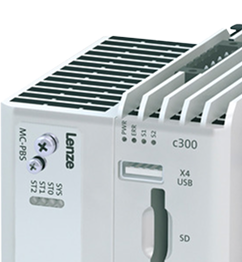
What does this EV charge controller do?
It manages how available electrical capacity is allocated across connected EV charging points, adjusting charging loads dynamically.
How many charging stations can it manage?
It can manage up to five charging stations and ten charging points.
What is dynamic charge management?
Dynamic charge management adjusts the power allocated to vehicles according to the capacity available at the installation, rather than assigning every charging point a fixed share.
Which EV chargers is it compatible with?
The listed compatible ranges include EVlink Pro AC, EVlink Pro DC, EVlink Smart Wallbox, EVlink Parking and EVlink City. Check the requirements of the intended installation before selecting a combination.
What power supply does it require?
It requires a 12–24 V DC supply and has a stated power consumption of 16 W.
Is it suitable for outdoor installation?
No. It is specified for indoor installation and has an IP40 protection rating.
How can it be mounted?
It supports wall or rail mounting and can be positioned horizontally or vertically.
What are its dimensions?
The controller measures 150 mm high, 157 mm wide and 46 mm deep. Its net weight is approximately 1 kg.
What operating conditions does it require?
Its specified operating temperature is 0–50 °C, with a relative humidity range of 10–95% and an operating altitude of up to 2,000 m.
How does it connect to charging stations?
It uses Ethernet RJ45 connections to communicate with charging stations.
Are an energy meter and modem included?
No. The product information lists the energy meter and 3G/4G modem as devices to be ordered separately.
Can it manage different charging zones?
Yes. The stated capacity is up to 20 zones across a maximum of four zone levels.
Does it offer priority charging and time-of-use settings?
The product information lists both priority charging profiles and time-of-use settings among its selectable functions. Confirm that the planned configuration meets the needs of the site.
Can it be integrated with solar generation or a building energy management system?
The listed functions include photovoltaic (PV) integration and building energy management system (BEMS) integration via an API. Integration requirements should be checked against the equipment used on site.